

Common Types of Coupling Structures
Coupling systems are essential mechanical components in industrial power transmission. They connect two rotating shafts and transfer torque while compensating for misalignment, vibration, and shock loads. In industries such as mining, metallurgy, oil & gas, power generation, and manufacturing, selecting the correct Coupling structure directly affects equipment reliability, maintenance cost, and operational efficiency.
What Is a Coupling?
A Coupling is a mechanical device designed to connect two shafts for torque transmission. Besides power transfer, modern coupling designs also compensate for angular, axial, and parallel misalignment. High-performance coupling systems can additionally reduce vibration and absorb transient shock loads generated during machine startup or heavy-duty operation.
Industrial engineers typically classify coupling products into rigid and flexible categories depending on the required motion compensation capability.
Why Coupling Selection Matters
Improper Coupling selection can lead to bearing damage, shaft fatigue, excessive vibration, and premature equipment failure. In high-torque applications, the coupling must maintain stable torque transmission while minimizing backlash and wear.
Several critical parameters influence coupling selection:
Torque capacity
Shaft misalignment tolerance
Rotational speed
Shock absorption capability
Lubrication requirements
Environmental conditions
For heavy-duty industrial equipment, flexible couplings are generally preferred because they improve system reliability under dynamic operating conditions.
Rigid Coupling Structure
Rigid couplings are among the simplest Coupling designs. They directly connect two shafts without allowing relative movement or misalignment compensation.
Common rigid coupling types include:
Sleeve coupling
Clamp coupling
Flange coupling
Rigid structures are suitable for precisely aligned systems where high torsional stiffness is required. They are widely used in low-speed conveyors, line shafts, and compact industrial equipment.
However, rigid couplings cannot absorb vibration or compensate for installation errors. Even slight shaft misalignment may generate excessive bearing loads and reduce service life.
Gear Coupling Structure
Gear couplings are widely used in heavy industrial machinery due to their high torque density and excellent durability. A typical gear Coupling consists of externally crowned gear hubs and internally toothed sleeves.
The crowned tooth profile allows limited angular and axial misalignment while maintaining high torque transmission capability. Gear couplings are commonly applied in:
Steel mills
Rolling equipment
Cement plants
Marine propulsion systems
High-power pumps and compressors
Because metallic tooth contact generates friction during operation, gear couplings require proper lubrication and periodic inspection. Poor lubrication may accelerate tooth wear and increase vibration.
Grid Coupling Structure
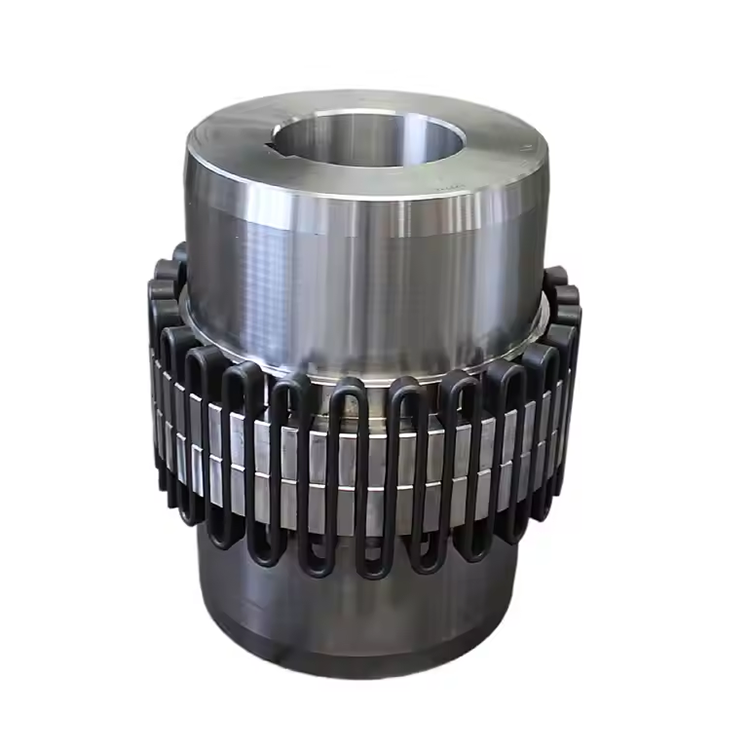
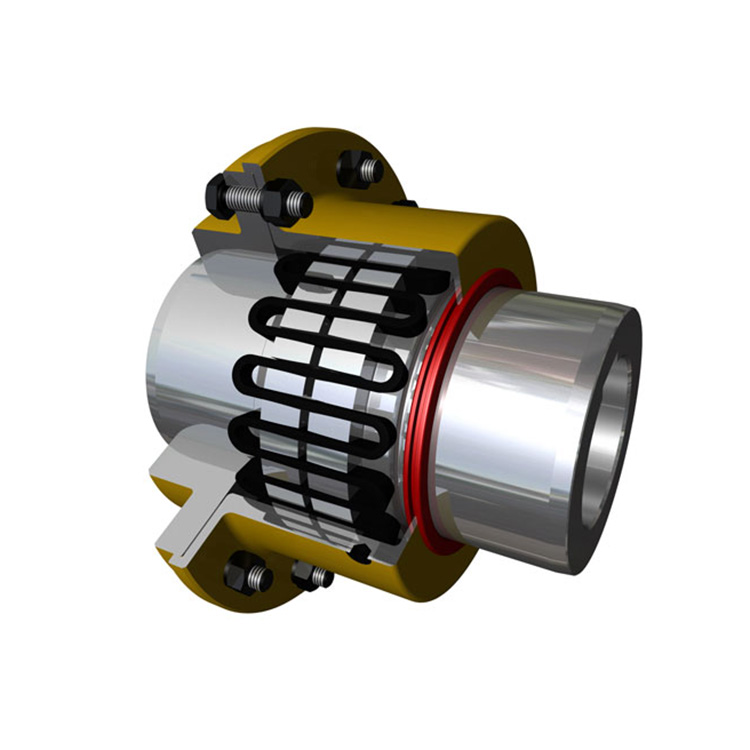
Grid couplings are flexible metallic couplings designed for shock absorption and vibration damping. The structure typically includes two slotted hubs, a spring steel grid element, and a protective cover filled with lubricant.
The serpentine spring grid acts as the torque-transmitting element. During operation, the grid flexes under load and absorbs impact energy, reducing peak torque transmission to connected equipment.
A grid Coupling offers several advantages:
Excellent vibration damping
Good overload protection
Moderate misalignment compensation
High torque capability
Easy maintenance
These couplings are frequently used in crushers, fans, pumps, conveyors, and mining equipment where shock loading is common.
Jaw Coupling Structure
Jaw couplings use elastomeric inserts positioned between two metallic hubs. The elastomer element transmits torque while reducing vibration and accommodating minor shaft misalignment.
Compared with metallic couplings, jaw Coupling designs require minimal maintenance because they operate without lubrication. They are especially suitable for light- and medium-duty applications such as:
Servo systems
Packaging machinery
Small pumps
HVAC equipment
The main limitation of jaw couplings is their lower torque capacity and reduced performance under high-temperature environments.
Disc Coupling Structure
Disc couplings utilize thin stainless-steel disc packs to transmit torque without backlash. These couplings provide high torsional rigidity and exceptional precision.
Disc Coupling systems are commonly selected for:
Turbomachinery
High-speed compressors
Precision motion systems
Power generation equipment
Unlike gear couplings, disc couplings do not require lubrication. Their all-metal construction also improves resistance to chemical corrosion and elevated temperatures.
Because of their zero-backlash design, disc couplings are preferred in applications demanding high rotational accuracy and stable dynamic balance.
Fluid Coupling Structure
Fluid couplings transmit torque hydraulically through internal fluid circulation rather than direct mechanical contact. This design enables smooth startup and excellent overload protection.
Fluid Coupling systems are widely used in:
Belt conveyors
Mining machinery
Crushers
Heavy-duty fans
One major advantage is the ability to reduce motor starting current and mechanical shock during acceleration. In heavy-load conveyor systems, fluid couplings help extend gearbox and motor lifespan.
However, fluid couplings generally have lower transmission efficiency than direct mechanical couplings.
How to Choose the Right Coupling
Selecting the proper Coupling requires evaluating both operating conditions and equipment characteristics. Engineers should carefully analyze:
Required torque
Rotational speed
Shaft diameter
Alignment condition
Maintenance accessibility
Environmental exposure
For high-speed precision applications, disc couplings are often the preferred choice. For shock-loaded industrial systems, grid or gear couplings provide superior durability. Jaw couplings are ideal for economical light-duty equipment requiring vibration isolation.
Working with an experienced coupling manufacturer also helps ensure proper sizing, material selection, and long-term operational reliability.
Conclusion
Modern industrial Coupling solutions are designed to improve transmission efficiency, absorb vibration, and protect rotating equipment under demanding operating conditions. From rigid and jaw couplings to advanced gear and grid coupling systems, each structure serves a unique engineering purpose.
Choosing the correct Coupling not only improves equipment stability but also reduces maintenance costs and unplanned downtime. For industrial users seeking reliable long-term performance, understanding different coupling structures is the first step toward building a more efficient power transmission system.
References
Mancuso, J. R. Couplings and Joints: Design, Selection and Application
AGMA Standard 9008 – Flexible Couplings Design Guide
Piotrowski, J. Shaft Alignment Handbook
Lovejoy Inc. – Flexible Coupling Engineering Manual
Rexnord Falk Steelflex Coupling Technical Documentation