

In modern industrial power transmission, precision and reliability are essential. Equipment such as pumps, compressors, conveyors, and gearboxes require stable torque transfer while minimizing vibration and misalignment. Among many coupling types, T20 Grid Coupling stands out as a high-performance solution for medium to heavy-duty applications.
As a professional T20 Grid Coupling Manufacturer with standardized production capability and bulk supply capacity, advanced grid couplings are designed to combine strength, flexibility, and long service life. With mature manufacturing processes and strict quality control, T20 grid coupling products support efficient and stable operation across different industries.
This article explains the structure, working principle, design features, advantages, and applications of T20 grid coupling, helping engineers better understand why it is widely used in power transmission systems.
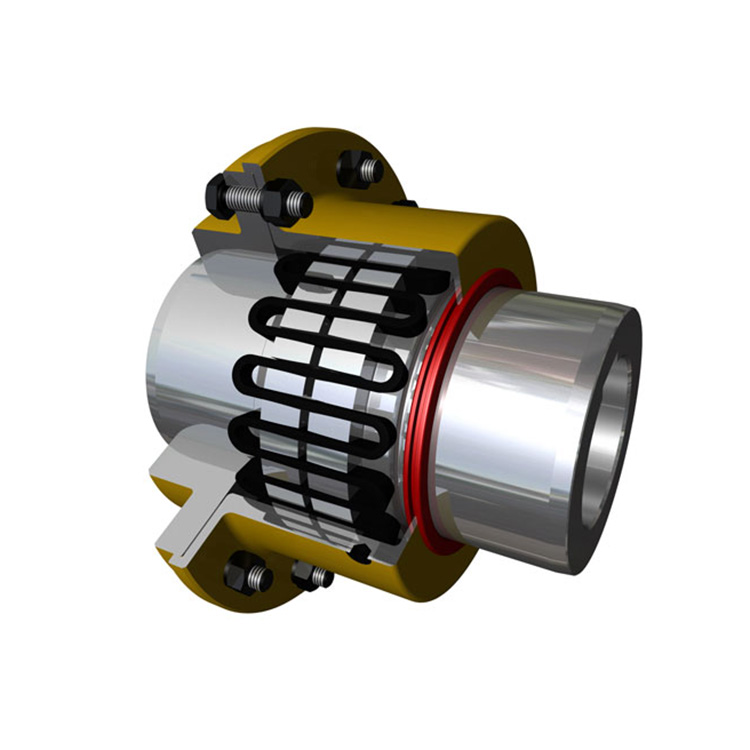
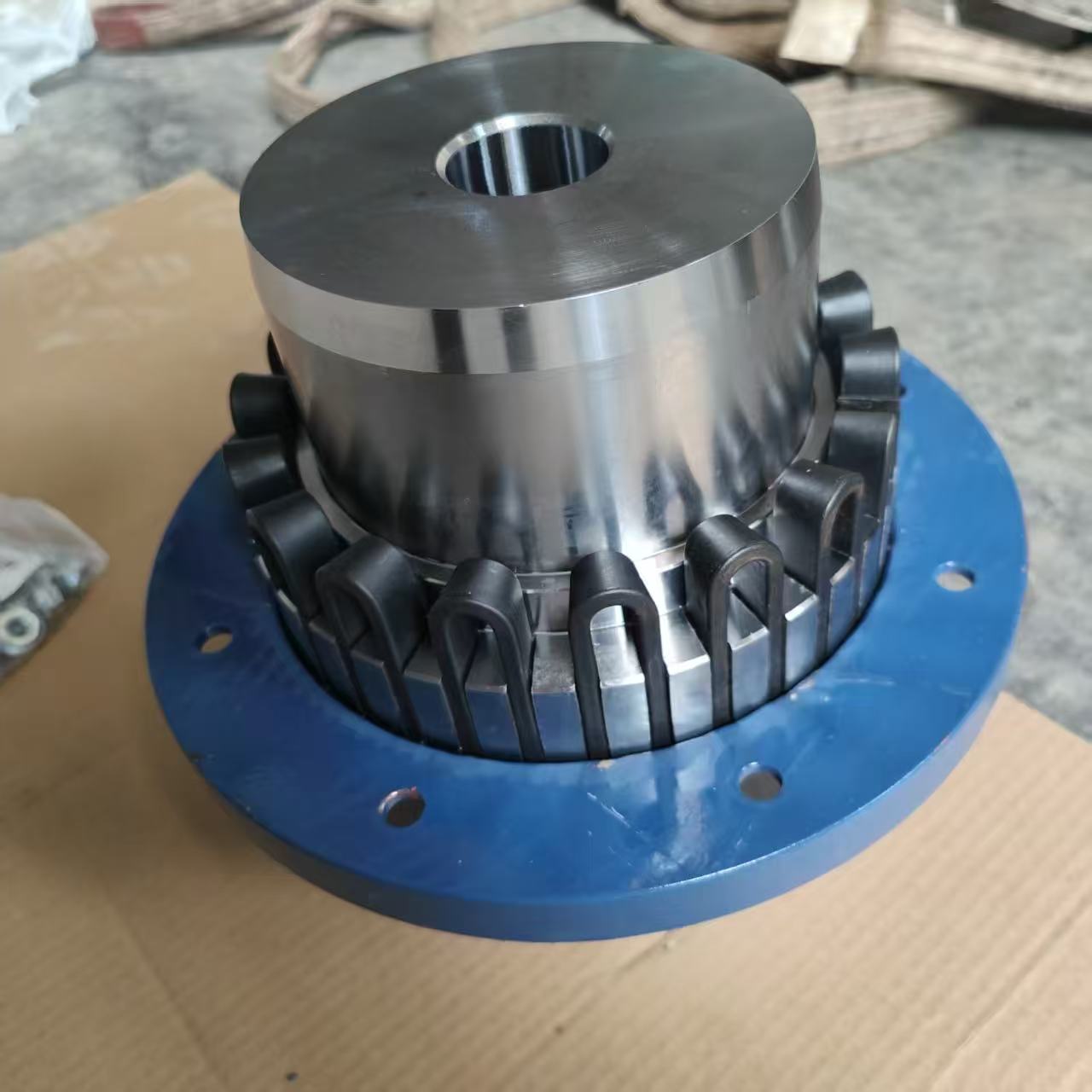
What Is T20 Grid Coupling?
T20 Grid Coupling is a type of flexible shaft coupling that uses a spring-like grid element positioned between two hubs to transmit torque. Unlike rigid couplings, grid coupling allows controlled flexibility while maintaining high torque capacity.
Its main purpose is to connect two rotating shafts and transfer power while:
·Absorbing shock loads
·Reducing vibration
·Compensating for misalignment
·Protecting connected equipment
T20 grid coupling is commonly used in industrial drives where reliability, damping, and ease of maintenance are required.
Basic Structure of T20 Grid Coupling
The structure of T20 grid coupling is designed for both strength and flexibility. It mainly consists of the following components:
1. Hubs
The hubs are mounted on each shaft end. They are usually made from high-strength steel and precision-machined to ensure accurate bore fit and torque transmission. The external grooves on the hubs hold the grid element securely.
2. Grid Spring Element
The grid is the core part of the coupling. It is a serpentine-shaped steel spring that fits into the grooves of both hubs.
Functions of the grid include:
·Transmitting torque
·Absorbing vibration
·Damping shock loads
·Allowing limited shaft movement
The grid’s elasticity enables T20 grid coupling to combine rigidity with flexibility.
3. Cover (Housing)
The cover encloses the coupling assembly and protects internal components. It also retains lubrication and prevents contamination from dust, moisture, and debris.
4. Seals and Lubrication System
Seals and grease channels ensure smooth operation and reduce wear on the grid and hubs. Proper lubrication improves efficiency and extends service life.
Working Principle of T20 Grid Coupling
T20 grid coupling works by transferring torque from one hub to another through the spring grid element. When the driving shaft rotates, the hub grooves engage the grid, which then transfers the force to the driven hub.
Because the grid is flexible, it can deform slightly under load, which allows the coupling to:
·Compensate angular misalignment
·Absorb sudden torque spikes
·Reduce vibration transmission
This design ensures smooth power delivery even in dynamic operating conditions, making T20 grid coupling suitable for motors, pumps, compressors, and conveyors.
Design Features That Improve Performance
1. High Shock Load Capacity
The spring grid design allows T20 grid coupling to absorb impact forces during startup, shutdown, and load changes. This protects motors and gearboxes from damage.
2. Vibration Damping
Unlike rigid couplings, grid couplings reduce vibration by distributing loads through the flexible grid. This lowers noise levels and improves system stability.
3. Misalignment Compensation
T20 grid coupling can accommodate:
·Angular misalignment
·Parallel offset
·Axial movement
This flexibility reduces stress on bearings and shafts, improving the lifespan of connected equipment.
4. Easy Maintenance Design
Grid elements can often be replaced without removing hubs from the shafts. This simplifies servicing and minimizes downtime in production lines.
5. Compact and Efficient Structure
The coupling provides high torque density within a compact size, making it ideal for installations with limited space.
Why T20 Grid Coupling Is Used in Industrial Production
In industrial environments, equipment must run continuously under varying loads. T20 grid coupling improves production efficiency by:
·Reducing mechanical failures
·Protecting expensive components
·Stabilizing torque transmission
·Lowering maintenance frequency
·Improving machine reliability
As a trusted T20 Grid Coupling Manufacturer with large-scale production and bulk supply capability, consistent quality and standardized manufacturing ensure every coupling performs reliably across batch installations.
In automated production systems, reliable grid coupling directly supports uptime and cost control.
Typical Applications of T20 Grid Coupling
T20 grid coupling is widely applied in:
·Pump and motor connections
·Compressors
·Gear reducers
·Conveyors
·Fans and blowers
·Industrial processing equipment
Wherever controlled flexibility and high torque are needed, T20 grid coupling provides a balanced solution between rigid strength and elastic protection.
Selection Considerations for T20 Grid Coupling
When selecting T20 grid coupling, engineers should evaluate:
·Required torque rating
·Shaft diameters and speed
·Allowable misalignment
·Environmental conditions
·Lubrication requirements
·Installation space
Choosing the correct model ensures optimal performance and safety for long-term operation.
Manufacturing and Production Advantage
From a manufacturing perspective, the quality of a grid coupling depends heavily on machining accuracy, heat treatment, and material control.
A professional T20 Grid Coupling Manufacturer with controlled production systems and stable bulk supply ensures:
·Consistent dimensional accuracy
·Reliable material strength
·Uniform heat treatment
·Scalable batch delivery
These factors allow large industrial projects to deploy T20 grid coupling confidently in power transmission systems.
Future Development of Grid Coupling Technology
With the advancement of industrial automation, T20 grid coupling design continues to evolve toward:
·Higher torque capacity
·Improved spring materials
·Better lubrication systems
·Reduced maintenance designs
·Longer service life
These improvements help grid couplings meet the increasing demands of modern power transmission applications.
Conclusion: T20 Grid Coupling as a Reliable Transmission Solution
In power transmission systems, T20 Grid Coupling is more than just a connector — it is a protective, flexible, and efficient transmission component. Its unique spring grid structure allows it to transmit high torque while absorbing vibration, compensating misalignment, and protecting connected equipment.
Partnering with a dependable T20 Grid Coupling Manufacturer with advanced production capability and reliable bulk supply ensures consistent performance and long-term stability. From pumps and motors to conveyors and compressors, T20 grid coupling remains a trusted solution for modern industrial power transmission.
References
GB/T 7714:Rechreche E, Bruyère J, Le Guennec Q, et al. Experimental and numerical analyses of grid couplings in quasi-static and dynamic conditions[J]. Mechanism and Machine Theory, 2024, 203: 105807.
MLA:Rechreche, E., et al. "Experimental and numerical analyses of grid couplings in quasi-static and dynamic conditions." Mechanism and Machine Theory 203 (2024): 105807.
APA:Rechreche, E., Bruyère, J., Le Guennec, Q., & Velex, P. (2024). Experimental and numerical analyses of grid couplings in quasi-static and dynamic conditions. Mechanism and Machine Theory, 203, 105807.