

Fundamental Functions of Mechanical Couplings
At its core, a coupling serves to connect two rotating shafts while transmitting power from a driving element to a driven component. Beyond simple power transmission, couplings accommodate misalignment between connected shafts, absorb shock loads, and provide vibration damping that protects downstream equipment. These multifunctional characteristics make coupling selection a critical engineering decision affecting overall system reliability and maintenance requirements.
Engineers must recognize that no single coupling design addresses all application requirements. Rigid couplings excel in precision applications where shaft alignment remains perfect, while flexible variants accommodate angular, parallel, or axial misalignment at the cost of some torsional stiffness. Understanding these trade-offs guides beginners toward appropriate coupling selection for specific operating conditions.
Types of Couplings and Their Design Characteristics
Rigid coupling designs provide zero misalignment accommodation but deliver maximum torque transmission efficiency. Sleeve couplings, clamp couplings, and flange couplings fall into this category, each offering distinct installation and performance characteristics. These couplings require precise shaft alignment during installation, making them suitable for applications where maintenance access permits accurate setup and where misalignment remains minimal throughout operation.
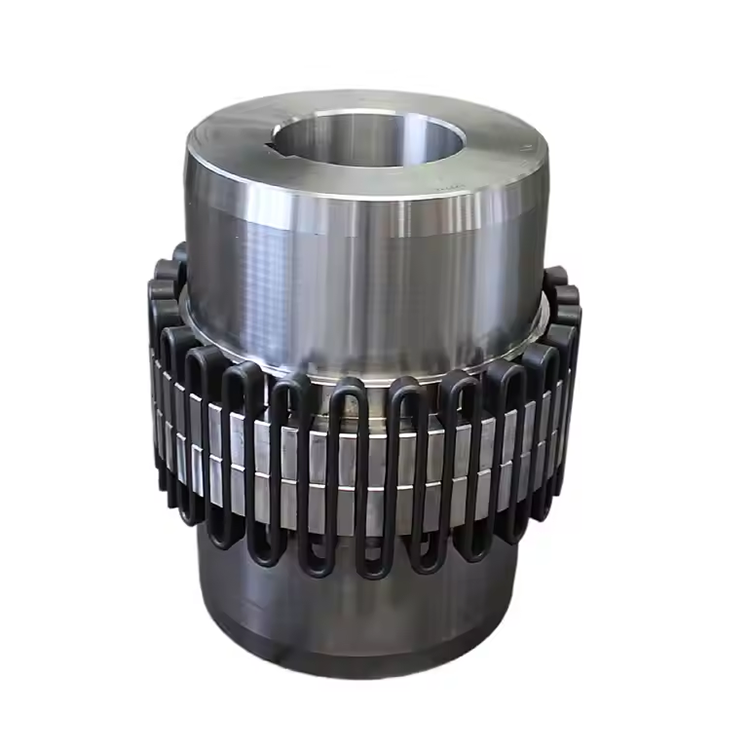
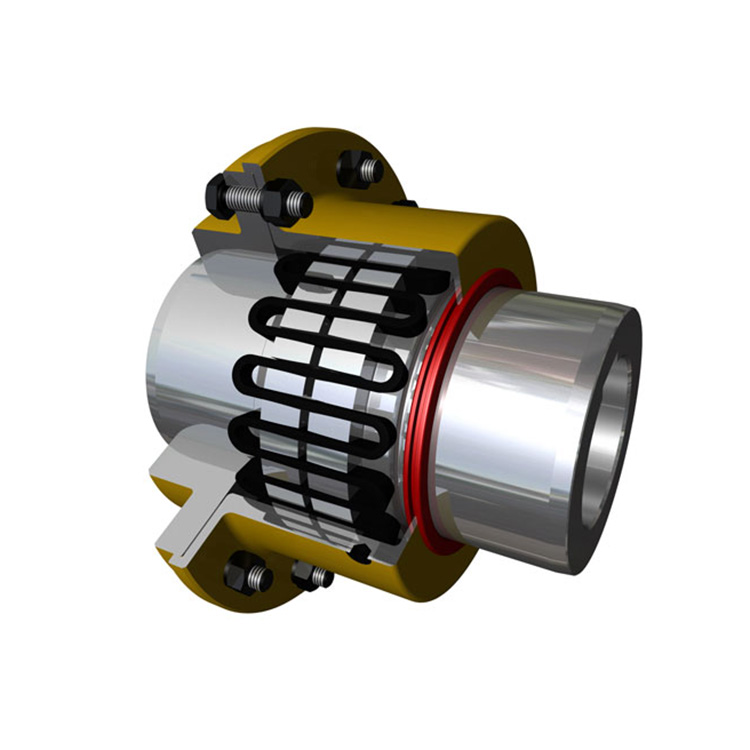
Flexible coupling designs incorporate elements that bend, compress, or slide to accommodate misalignment. Jaw couplings, gear couplings, and grid couplings represent common flexible designs, each using different mechanisms to maintain torque transmission while allowing relative movement between shafts. Selecting appropriate flexible coupling types requires evaluating misalignment magnitude, torque requirements, and service environment.
Key Design Parameters in Coupling Selection
Torque capacity represents the primary design parameter for any coupling application. Engineers calculate required torque based on power transmission requirements, adding safety factors that account for starting torque, overload conditions, and dynamic effects. Undersizing coupling torque capacity leads to premature failure, while excessive oversizing increases cost and may add unnecessary inertia to the system.
Misalignment accommodation capability varies significantly among coupling designs. Angular misalignment occurs when shaft centerlines intersect at an angle, parallel misalignment describes offset centerlines, and axial misalignment involves relative shaft movement along the axis. Flexible couplings specify maximum allowable misalignment values that must exceed anticipated application conditions to ensure reliable operation.
Material Selection for Coupling Components
Steel alloys dominate coupling manufacturing due to their high strength-to-weight ratios and predictable performance characteristics. Carbon steel provides economical solutions for general-purpose applications, while alloy steels like 4140 or 4340 deliver enhanced strength and toughness for demanding services. Stainless steel coupling variants resist corrosion in chemical processing, marine, or food industry applications where contamination prevention matters.
Elastomeric elements in flexible couplings require careful material selection based on operating temperature, chemical exposure, and dynamic loading conditions. Natural rubber offers good resilience and damping but degrades rapidly in oil or elevated temperatures. Polyurethane, neoprene, and nitrile rubber provide alternatives with different property profiles that suit specific coupling applications. Material compatibility charts help beginners select appropriate elastomers for their operating environment.
Installation Best Practices for Coupling Systems
Proper installation begins with thorough shaft preparation and alignment verification. Shaft ends must be clean, free of burrs, and dimensionally compatible with coupling bore specifications. Beginners should measure shaft diameter with calipers to verify interference or clearance fits match coupling manufacturer recommendations, as improper fits cause loosening, fretting corrosion, or premature failure.
Alignment procedures vary depending on coupling type and application precision requirements. Dial indicators provide the most accurate alignment measurement, revealing angular and parallel misalignment with precision measurable in thousandths of an inch. Laser alignment tools offer modern alternatives that simplify procedures while delivering accuracy suitable for most industrial coupling installations. Document alignment readings as baseline references for future maintenance comparisons.
Maintenance Strategies for Coupling Longevity
Proactive maintenance preserves coupling performance and prevents unexpected failures that disrupt production. Visual inspection schedules depend on application criticality and operating severity, with critical equipment requiring monthly examinations while non-critical systems may suffice with quarterly inspections. Look for signs of wear, corrosion, cracking, or loose fasteners that indicate deteriorating condition.
Lubrication requirements differ among coupling designs. Gear couplings require periodic grease replenishment to prevent tooth wear, while elastomeric element couplings need no lubrication but benefit from periodic element inspection. Following manufacturer lubrication specifications prevents over-greasing that can cause seal failure or under-greasing that accelerates wear. Maintain lubrication records that document product types, quantities, and service intervals for coupling systems.
Common Coupling Failure Modes and Prevention
Fatigue failure represents the most frequent coupling failure mode, resulting from cyclic loading that progressively weakens components until catastrophic fracture occurs. Proper torque rating selection, adequate safety factors, and regular inspection help prevent fatigue failures. Beginners should understand that fatigue cracking often initiates at stress concentrations like keyways, fastener holes, or geometric transitions in coupling components.
Misalignment-induced wear accelerates when flexible coupling elements operate beyond design misalignment limits. Excessive angular or parallel misalignment causes rapid elastomer degradation or gear tooth wear that compromises torque transmission capacity. Laser alignment correction addresses this failure mode, while selecting couplings with greater misalignment capacity provides design margins that accommodate unforeseen alignment changes during operation.
Standards and Certifications in Coupling Design
International standards govern coupling design, manufacturing, and performance verification to ensure interchangeability and reliability. API 671 specifies requirements for special-purpose couplings for petroleum, chemical, and gas industry services, covering design, materials, inspection, and testing. AGMA standards address gear coupling design and rating methods, while ISO 14691 provides general specifications for power transmission couplings.
Compliance with relevant standards demonstrates coupling quality and enables global interchangeability that simplifies maintenance and procurement. Beginners should verify that couplings purchased for industrial applications carry appropriate certifications from recognized testing agencies. These certifications provide assurance that coupling performance meets stated specifications and that manufacturing quality controls exist to ensure consistency.
Making Informed Coupling Design Decisions
Successful coupling design balances multiple competing factors including torque capacity, misalignment accommodation, cost, maintenance requirements, and service life expectations. Beginners benefit from consulting with experienced application engineers who can review specifications and recommend appropriate solutions based on similar successful installations. Building this knowledge base through hands-on experience and continued learning accelerates competency in coupling selection and design.
Remember that coupling design excellence emerges from understanding fundamentals, applying proven engineering principles, and learning from both successes and failures. Document your design decisions, maintain records of coupling performance in actual applications, and continuously refine your selection criteria based on field experience. This systematic approach builds expertise that delivers reliable, cost-effective coupling solutions throughout your engineering career.
References
American Petroleum Institute. (2020). API Standard 671 - Special-purpose couplings for petroleum, chemical, and gas industry services. API Publishing Services.
American Gear Manufacturers Association. (2019). AGMA 9002-C16 - Gear coupling selection method. AGMA Standards Development.
International Organization for Standardization. (2018). ISO 14691:2018 - Industrial couplings - General specifications. ISO Central Secretariat.
Machinery Information Services. (2021). Coupling selection and application guide for rotating equipment. MIS Technical Publications.
American Society of Mechanical Engineers. (2019). ASME B106.1M - Power transmission couplings - Selection, installation, and maintenance guidelines. ASME Standards.