

In rotating machinery, the connection between driver and driven shafts is one of the most critical assemblies in the entire powertrain. A properly selected coupling combined with precise shaft alignment determines whether your equipment runs smoothly for years or suffers chronic failures. Misalignment remains the leading cause of premature bearing wear, seal damage, and coupling fatigue across virtually every industrial sector — from petrochemical plants to mining operations.
This guide breaks down the engineering principles behind coupling selection, shaft alignment methodology, and the real-world impact on equipment reliability. Whether you are specifying components for a new installation or troubleshooting an existing drivetrain, the following sections provide actionable insights rooted in decades of field experience.
Why Coupling Selection Matters More Than You Think
A coupling does far more than simply connect two shafts. It must accommodate misalignment, transmit torque efficiently, dampen vibration, and in many cases, provide electrical isolation between machine components. Selecting the wrong type introduces stress concentrations that cascade into bearing failures, increased energy consumption, and unplanned shutdowns.
The three primary functions of any industrial coupling include torque transmission, misalignment compensation, and vibration attenuation. Each function must be evaluated against your specific operating conditions — including speed, load profile, temperature, and environmental exposure — before a specification can be finalized.
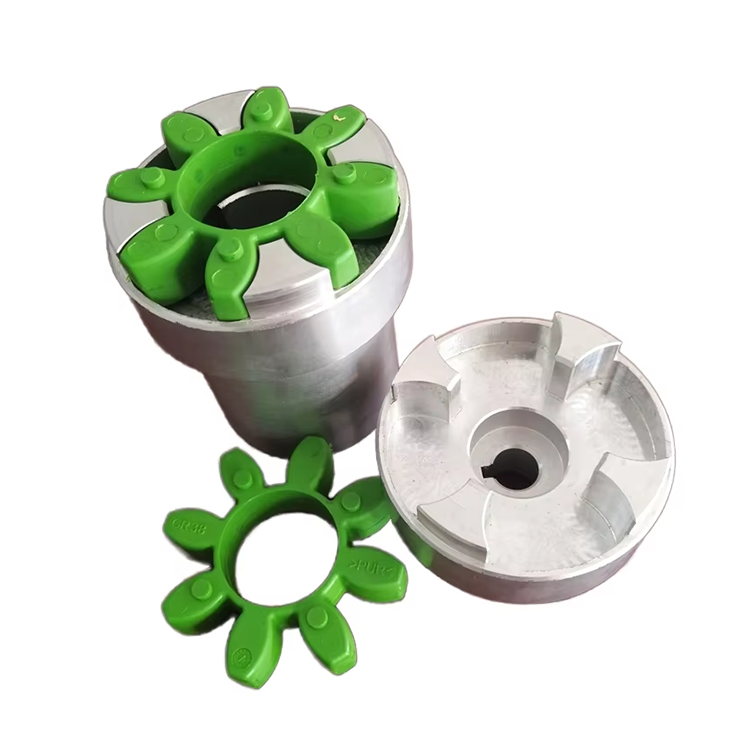
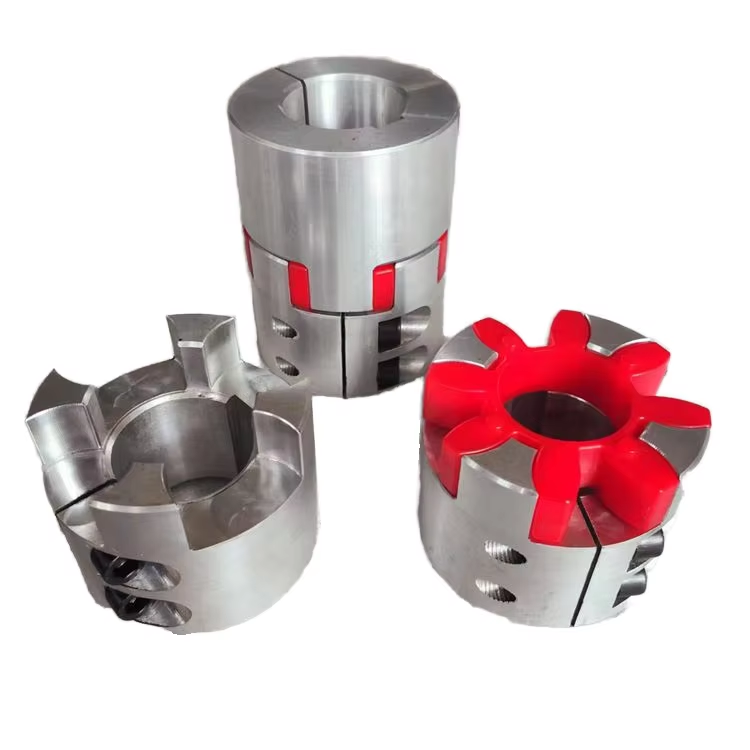
Data from major rotating equipment insurers consistently shows that coupling-related failures account for 15-20% of all insured mechanical breakdown claims in process industries. The majority of these failures trace back to either incorrect coupling selection or poor shaft alignment at installation.
Understanding Shaft Misalignment: Types and Causes
Shaft misalignment occurs when the centerlines of the driver and driven shafts do not coincide within acceptable tolerances. Two fundamental misalignment types exist: angular misalignment, where shaft centerlines intersect at an angle, and parallel offset, where shaft centerlines remain parallel but are displaced laterally. Real-world installations almost always exhibit a combination of both conditions.
Common causes include thermal expansion during operation, foundation settlement, pipe strain on connected equipment, and installation tolerances. Soft foot conditions — where a machine foot does not sit flat on its baseplate — are among the most frequently overlooked contributors to chronic misalignment.
Industry alignment tolerances have tightened significantly over the past two decades. Modern precision alignment standards specify maximum offsets measured in thousandths of an inch at the coupling face, far stricter than the "close enough" approaches that were common in earlier industrial practice.
Laser Alignment vs. Dial Indicator Methods
Traditional dial indicator alignment methods require skilled technicians and significant time investment. The process involves rotating shafts incrementally while recording indicator readings to calculate offset and angularity values. While capable of high accuracy in experienced hands, dial indicator methods are susceptible to reading errors, bracket deflection, and thermal drift during long measurement sequences.
Laser alignment systems have become the industry standard for most industrial applications. These systems project laser beams across coupling assemblies, calculating misalignment values digitally in real time. The advantages are substantial: measurement accuracy typically improves by 60-80% compared to dial methods, setup time reduces by 50-70%, and graphical interfaces guide technicians through correction moves step by step.
For critical applications — such as turbine-generator sets or high-speed compressor trains — laser alignment systems with thermal growth compensation capabilities are essential. These systems measure shaft position at ambient temperature and then calculate expected position changes during operation, ensuring alignment remains within specification across the full temperature range.
How Misalignment Affects Equipment Reliability
The consequences of operating with misaligned shafts extend well beyond the coupling itself. Misalignment forces generate cyclic bending loads on both shafts, accelerating bearing fatigue dramatically. Studies by machinery reliability organizations indicate that operating with angular misalignment exceeding 0.005 inches per inch of coupling face can reduce bearing life by 50% or more.
Seal and packing failures represent another costly consequence. Shaft deflection from misalignment creates uneven wear patterns on mechanical seals, shortening mean time between failures. In process plants, seal failures often trigger product contamination, environmental releases, and emergency shutdowns costing tens of thousands of dollars per incident.
Energy efficiency also suffers measurably. Misaligned equipment draws additional power to overcome the mechanical friction generated by bending forces in the shaft. Plant energy audits consistently identify alignment correction as one of the most cost-effective efficiency improvements available, with typical energy savings of 2-5% per corrected machine.
Step-by-Step Shaft Alignment Procedure
Effective shaft alignment follows a systematic sequence that experienced reliability engineers have refined over thousands of field applications. Begin with a thorough soft foot check — using a dial indicator or feeler gauge to verify that each machine foot sits flat on its baseplate within 0.002 inches. Correct any soft foot conditions before attempting alignment corrections.
Next, establish rough alignment using straightedges and feeler gauges to bring the equipment within the adjustment range of your precision measurement system. This step dramatically reduces the time required for final laser alignment adjustments.
Perform precision laser measurement at multiple rotational positions, recording offset and angularity values at both the inboard and outboard coupling planes. Calculate required shimming and lateral moves using the alignment system's software, then implement corrections in a systematic sequence — typically starting with vertical shimming adjustments before making horizontal lateral moves.
After making corrections, re-measure to verify alignment falls within specification. For equipment subject to significant thermal growth, conduct hot alignment checks after the machine reaches operating temperature to confirm that thermal movement has been accurately compensated.
Preventive Maintenance: Extending Coupling Service Life
A proactive maintenance program significantly extends coupling service life and reduces unplanned downtime. Establish vibration monitoring baselines for each coupled machine train, using acceleration, velocity, and displacement measurements to track condition trends over time.
Schedule periodic alignment verification checks — at minimum annually for critical equipment and biannually for general service machines. Even well-installed machines experience gradual alignment drift from foundation settlement, thermal cycling, and vibration-induced component shifts.
Inspect coupling elements during scheduled outages, looking for signs of fatigue cracking, wear, corrosion, or element deterioration. Flexible coupling elements such as elastomer inserts or grid segments have finite service lives and should be replaced according to manufacturer recommendations based on operating hours and load cycles.
Frequently Asked Questions
What is the acceptable shaft alignment tolerance for industrial equipment?
Alignment tolerances depend on operating speed and coupling type. As a general guideline, flexible couplings typically require offset values below 0.002 inches and angularity below 0.0005 inches per inch of coupling face at operating speed above 3,600 RPM. Rigid couplings demand even tighter tolerances. Always reference the coupling manufacturer's published alignment specifications for your specific application.
How often should shaft alignment be checked?
Critical equipment should undergo alignment verification at least annually, or following any maintenance activity that disturbs the machine train — such as bearing replacement, foundation repair, or piping modifications. General service equipment typically requires biannual checks. Vibration trend data can help identify machines experiencing alignment drift before failures develop.
Can misalignment cause coupling failure even with a flexible coupling?
Yes. While flexible couplings accommodate limited misalignment, operating near or beyond rated misalignment capacity dramatically reduces coupling element fatigue life. Flexible elements are designed to compensate for residual misalignment after precision alignment — not to serve as a substitute for proper shaft alignment. Chronic operation at the coupling's misalignment limit typically causes premature element failure.
What tools are required for precision shaft alignment?
Modern laser alignment systems provide the most efficient and accurate results. Essential supporting tools include precision shim kits (in 0.001-inch increments), torque wrenches for bolt tightening, dial indicators for soft foot checks, and a properly calibrated thermal measurement device for hot alignment verification. Machine jacking bolts are strongly recommended for making precise lateral corrections without hammering or prying on equipment cases.
Does thermal growth really affect shaft alignment?
Absolutely. Operating temperatures cause differential expansion between machine cases, baseplates, and support structures. Turbine-driven equipment can experience thermal growth exceeding 0.020 inches between ambient and full-load conditions. Failing to account for this movement during alignment means your machine starts misaligned the moment it reaches operating temperature. Laser alignment systems with thermal growth modeling capabilities are essential for these applications.
Conclusion
Proper coupling selection combined with precision shaft alignment represents one of the most impactful reliability investments any industrial facility can make. The engineering principles are well-established, the measurement technology is mature and accessible, and the financial returns — measured in reduced downtime, lower energy consumption, and extended component life — are well-documented across every industrial sector. Implementing systematic alignment procedures and coupling maintenance programs transforms shaft connection from a recurring failure point into a reliable, long-service-life component of your rotating equipment fleet.
References
ASME Standard B73.1 — Dimensional Standard for Horizontal Centrifugal Pumps
API 686 — Recommended Practice for Machinery Installation and Design
Piotrowski, J. (2006). Shaft Alignment Handbook, 3rd Edition. CRC Press.
ISO 10816-3 — Mechanical Vibration Evaluation of Machine Vibrations
Bloxham, S. (2012). "Coupling Selection and Alignment for Rotating Equipment." Hydrocarbon Processing, 91(4), 67-72.