

A single T20 grid coupling is a catalog purchase. A multi-year supply relationship — plant standardization across dozens of machines, recurring spares for a maintenance program, or volume for an OEM product line — is a different problem. The unit price matters, but the price is only one term of a contract that also includes consistency, availability, documentation, and support. A T20 grid coupling supplier chosen on price alone, without checking the other terms, becomes the reason a production line stops when the cheap supplier cannot deliver the third batch to the same specification. This guide covers the criteria that predict whether a supplier can actually support a long-term relationship.
Production Capacity and Batch Consistency
Capacity is not just the maximum number of couplings a T20 grid coupling supplier can produce in a month — it is the supplier's ability to produce the same coupling to the same specification across batches separated by months. A supplier that delivers a correct first batch and a different second batch has a process-control problem, not a capacity problem, and the inconsistency shows up as variable fit, variable balance, or variable grease fill across the installed fleet.
The evidence of batch consistency is the supplier's inspection and test records across multiple production lots, not a single sample. A buyer evaluating a long-term supplier should request documentation from at least two or three recent production batches of the same T20 size — material certificates, hardness records, dimensional checks — and confirm the values are stable lot to lot. Stable records across batches are a stronger signal of a reliable supply partner than a low price on one order.
Customization and Engineering Response
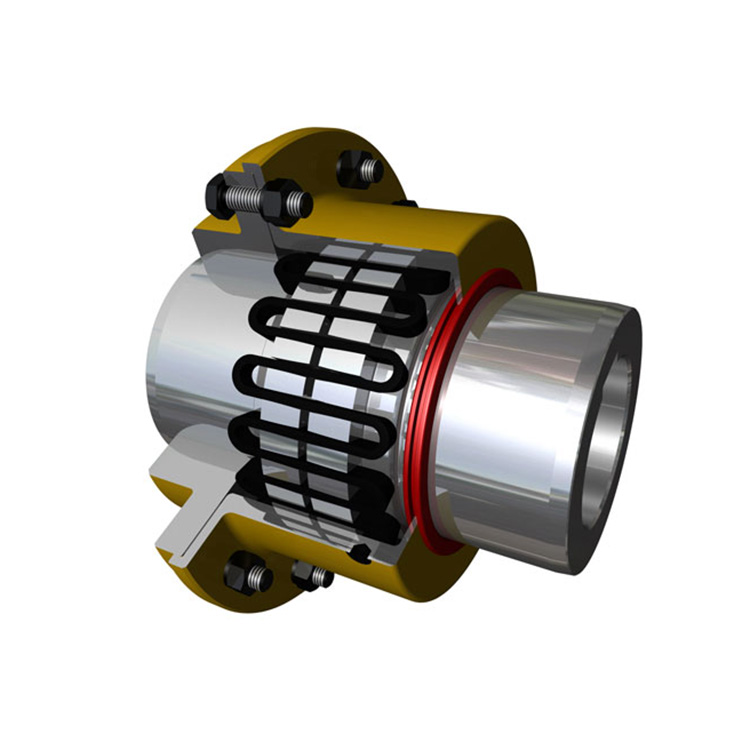
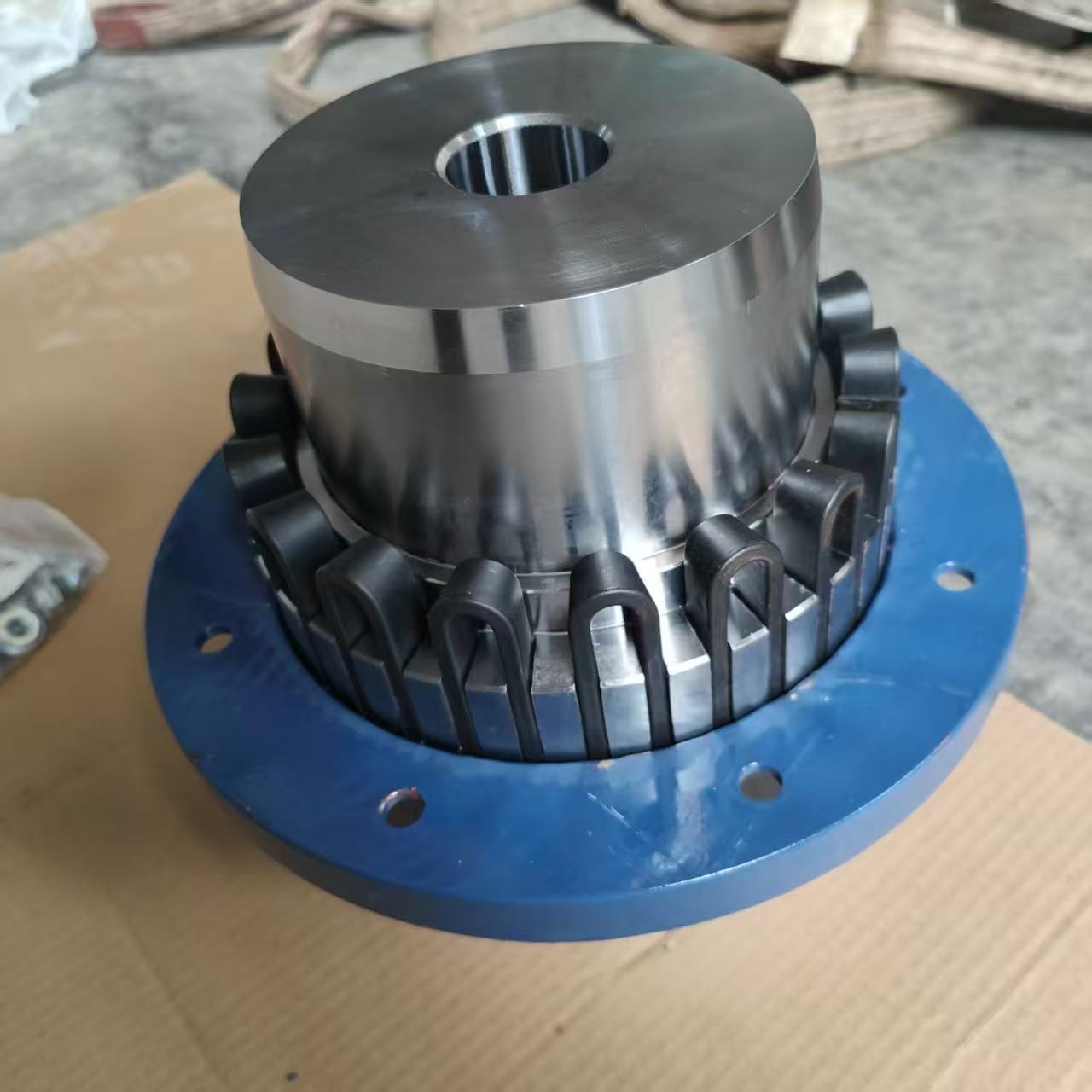
Standard T20 sizes cover most applications, but long-term supply relationships frequently require variation: a non-standard bore to match an existing shaft, a specific keyway class, a seal material for a high-temperature duty, or a grease grade for a food-industry environment. The question is whether the T20 grid coupling supplier can engineer and hold these variations consistently, or whether every custom request becomes a one-off that slips the schedule.
A supplier with in-house engineering can review a duty summary, propose the bore, fit, seal, and grease specification, and confirm feasibility within the lead time. A supplier that only sells from a fixed catalog treats each variation as an exception. For a buyer standardizing a fleet, the ability to specify variations once and receive them consistently across re-orders is what keeps the spare parts list short and the maintenance program simple.
Documentation Discipline
Long-term supply relationships generate documentation debt if the supplier does not manage it. Each batch needs material certificates, inspection records, and — for speed-rated couplings — balance records, and these must be retrievable when a coupling fails in service three years later and the failure analysis needs the as-manufactured data. A T20 grid coupling supplier with a document control system assigns a lot or serial traceability and retains the records; one without it loses the records between orders and leaves the buyer without evidence when a warranty or failure question arises.
The documentation expectation should be stated in the supply agreement, not discovered during the first dispute. For a buyer sourcing from an export-oriented supplier — commonly located in industrial manufacturing regions such as Hebei, China, which serves North American, European, and Southeast Asian markets — the documentation standard is usually part of the export package, but confirming the retention period and retrieval process in writing prevents the gap that appears when records are needed and unavailable.
Lead Time Reliability
The quoted lead time is a promise, and the measure of a T20 grid coupling supplier is whether the promise holds across orders. A supplier that quotes four weeks and delivers in six, consistently, disrupts the buyer's maintenance scheduling and forces larger safety stock than the buyer wants to carry. A supplier that quotes six weeks and delivers in four gives the buyer flexibility the price alone does not show.
Lead time reliability depends on the supplier's raw material pipeline — particularly the steel for the grid and hubs — and its production scheduling discipline. A supplier that stocks the common T20 sizes and the standard steel grades can respond to spares orders quickly; one that procures steel per order carries the mill lead time into every delivery. For a buyer, asking how the supplier manages raw material stock for the specified sizes reveals more about real lead time than the quote sheet.
Technical Support and Failure Analysis
A long-term supply relationship includes the failures that will occur in service — grid wear, seal leaks, misalignment damage — and the supplier's response to them is part of the value. A T20 grid coupling supplier that provides failure analysis from the returned coupling and the as-manufactured records helps the buyer distinguish a manufacturing defect from an installation or duty problem, which determines whether the correction is a process change at the supplier or a procedure change at the plant.
The support capability matters most for buyers operating critical equipment where a coupling failure stops production. The supplier's ability to provide a replacement grid element from stock, or a complete spare coupling within the maintenance window, is a supply term as real as the price. A buyer should confirm the supplier's spares policy — what is stocked, what the emergency lead time is, and whether the critical sizes in the buyer's fleet are in the supplier's standing inventory.
Information the Buyer Should Provide for an Accurate Quote
A T20 grid coupling supplier can only quote accurately against a complete duty summary. The minimum information is: the T20 size or the torque and speed requirement with service factor, the shaft diameter and keyway standard, the operating temperature range, the contamination environment, the quantity and delivery schedule, and the documentation requirements. A quote received against incomplete information is a price for an assumed configuration, not a price for the buyer's actual application, and the gap appears at delivery or in service.
For a long-term relationship, the buyer should also state the expected annual volume and the re-order pattern, because the supplier prices and stocks differently for a known annual volume than for a series of unrelated spot orders. The standing relationship lets the supplier hold raw material and finished stock for the buyer's sizes, which is what converts a price quote into a reliable supply. That reliability is one part of the cost-and-performance trade-off the buyer weighs across the application.
Red Flags in Supplier Evaluation
Several signals indicate a supplier that will not support a long-term relationship: resistance to providing material or inspection documentation, inability to state how raw material is stocked for the specified sizes, no engineering contact for customization questions, and lead times that shift without explanation between quotes. None of these shows up in the unit price, and all of them surface as cost after the relationship begins. A buyer comparing a T20 grid coupling supplier on total relationship value — not unit price — weights these signals alongside the quote.
Frequently Asked Questions
What should I ask a T20 grid coupling supplier about batch consistency?
Request inspection and test records from two or three recent production batches of the same T20 size — material certificates, grid hardness, dimensional checks — and confirm the values are stable lot to lot. Consistent records across batches indicate a controlled process; a supplier that can only show a single sample has not demonstrated repeatability.
How do I verify a supplier's lead time before committing?
Ask how raw material for the specified T20 sizes is stocked, and request references or delivery history for similar recurring orders. A supplier that holds common sizes and standard steel grades can quote realistic lead times; one that procures steel per order carries mill lead time into every delivery and is more likely to slip the schedule.
What documentation should the supply agreement require?
Material certificates, heat treatment hardness records per heat, dimensional inspection records for critical features, balance records for speed-rated couplings, and a lot or serial traceability system with a stated record-retention period. State these as acceptance criteria in the agreement, not as requests after a failure.
Should I consolidate T20 grid coupling sourcing with one supplier?
For fleet standardization and recurring spares, consolidating with one qualified supplier simplifies the spare parts list, improves batch consistency, and gives the supplier volume to hold stock for your sizes. The trade-off is single-source risk, which is managed by confirming the supplier's capacity, documentation, and spares policy before committing the relationship.
Conclusion
Choosing a long-term T20 grid coupling supplier is a relationship decision measured on more than the unit price. Production capacity that delivers consistent batches, customization engineered and held across re-orders, documentation discipline that survives years, lead time reliability backed by raw material stock, and technical support that includes failure analysis — these are the terms that keep a multi-year supply relationship from becoming a sequence of emergencies. A buyer who provides a complete duty summary, states the expected volume, and weights these criteria alongside the quote gets a supplier that supports the plant's reliability rather than testing it. The price is one number; the relationship is the rest of the contract.
References
AGMA 9002-B04 — Flexible Couplings: Design Considerations and Selection
ISO 14691:2008 — Flexible Couplings: Design, Selection and Application
Cousins, P. D., Handfield, R. B., Lawson, B., & Petersen, K. J. (2019). Strategic Supply Chain Management, 3rd Edition. McGraw-Hill Education.
ISO 9001:2015 — Quality Management Systems — Requirements
Mancuso, J.R. (1999). Couplings and Joints: Design, Selection, and Application, 2nd Edition. Marcel Dekker.