

In modern mechanical and industrial systems, efficient and reliable power transmission is vital for stable operation. One of the most widely adopted flexible connection components is the spider elastic coupling, also referred to as a jaw coupling equipped with an elastomeric “spider” insert. It plays a crucial role in connecting two shafts, while offsetting misalignment, reducing vibration, and safeguarding equipment against shock loads. This article elaborates on the definition, working mechanism of spider elastic couplings, and their significance in power transmission systems.
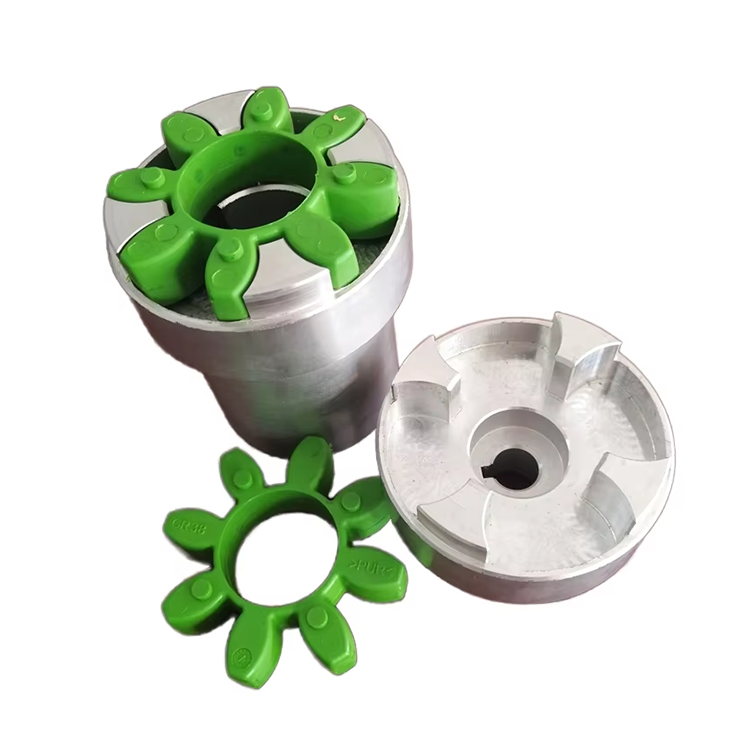
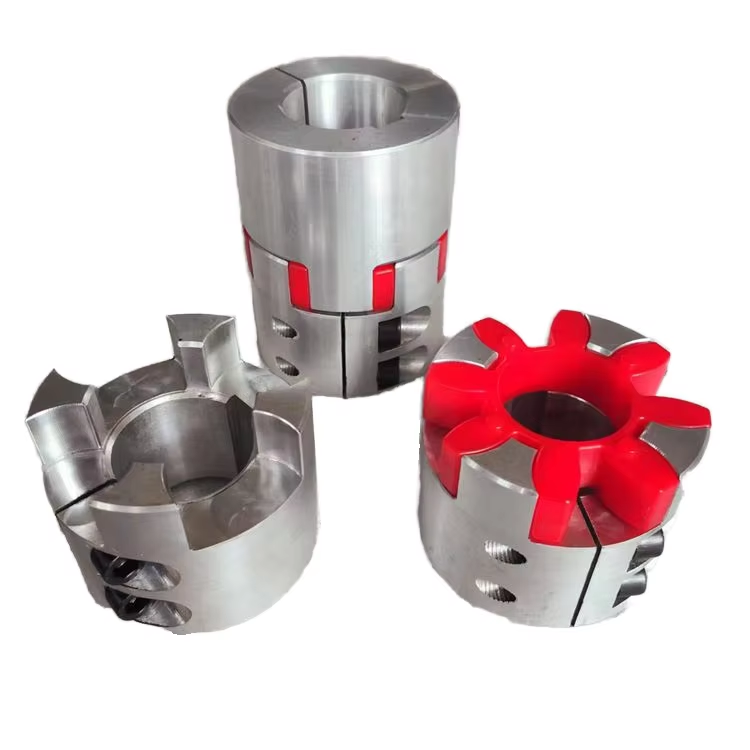
What Is a Spider Elastic Coupling?
A spider elastic coupling is a kind of flexible coupling consisting of three main components:
Two metal hubs (usually fabricated from steel, aluminum, or cast iron)
One elastomeric insert (commonly called the “spider”)
The spider insert is generally made of materials like polyurethane, rubber, or other engineering elastomers. It is placed between the two hubs and functions as a cushioning component. Its primary functions are as follows:
Transmitting torque between two shafts
Absorbing vibration and shock loads
Compensating for minor misalignments
Minimizing wear on connected components
Owing to its simple structure and dependable performance, it is extensively applied in light to medium-duty industrial scenarios.
How Does a Spider Elastic Coupling Work?
The working principle of a spider elastic coupling is based on elastic deformation and torque transfer via a flexible medium.
1. Torque Transmission Through Compression
When the driving shaft rotates, it transfers torque to the first hub. The hub presses against the elastomeric spider, which undergoes slight compression and transmits the force to the second hub, thereby driving the connected shaft.
2. Vibration Damping Through Elastic Material
The spider insert absorbs the energy generated by vibration and impact. Instead of directly transferring shock loads, the elastomer deforms and dissipates a portion of the energy, reducing stress on the entire system.
3. Compensation for Misalignment
In practical installation scenarios, achieving perfect shaft alignment is challenging. The flexible spider allows for limited angular, radial, and axial misalignment without damaging the system or compromising performance.
Key Features of Spider Elastic Couplings
Spider elastic couplings are popular due to their balance of simplicity and performance. Their key characteristics include:
Simple and compact structure
Easy installation and maintenance
Outstanding shock absorption capacity
Availability of low backlash options
Electrical insulation (depending on the spider material)
Cost-effective solution for numerous applications
Advantages in Power Transmission Systems
Incorporating spider elastic couplings into power transmission systems provides several important benefits:
Improved Equipment Protection
By absorbing shock loads, the coupling prevents sudden torque surges from damaging motors, gearboxes, or driven machinery.
Reduced Vibration and Noise
The elastomer insert significantly diminishes vibration, resulting in quieter and smoother machine operation.
Longer Service Life
Reduced mechanical stress leads to less wear on bearings, shafts, and connected components, extending the overall service life of the equipment.
Minimal Maintenance Requirements
Spider couplings have few components and do not require lubrication, making them easy to maintain.
Common Applications
Spider elastic couplings are widely used in various industrial systems, including:
Pumps and compressors
Conveyor systems
Packaging machinery
Automation equipment
Machine tools (light-duty CNC systems)
Fans and blowers
Small industrial gear drives
They are particularly suitable for applications that require smooth operation and moderate torque transmission.
Types of Spider Materials
The performance of a spider elastic coupling largely relies on the material of the elastomer insert:
Standard rubber spiders – Good damping effect and cost-effective
Polyurethane spiders – Higher wear resistance and torque capacity
High-hardness elastomers – More suitable for heavy-duty or high-temperature environments
Soft elastomers – Better vibration absorption but lower torque capacity
Selecting the appropriate material ensures optimal performance and service life.
How to Choose the Right Spider Elastic Coupling
When selecting a spider elastic coupling, several factors should be taken into consideration:
Torque requirements
Shaft size and keyway specifications
Operating speed (RPM)
Level of vibration or shock load
Environmental conditions (temperature, oil, chemicals)
Required misalignment tolerance
Proper selection ensures stable performance and avoids premature failure.
Conclusion
A spider elastic coupling is a simple yet highly effective component in modern power transmission systems. By combining rigid metal hubs with a flexible elastomer insert, it efficiently transmits torque while absorbing vibration, reducing noise, and protecting machinery from shock loads. Its reliability, cost-effectiveness, and ease of use make it an essential solution in many industrial applications where smooth and stable operation is required.
References
GB/T 7714: Experimental Investigations and Material Modeling of an Elastomer Jaw Coupling. Materialprüfung / Materials Testing
MLA:Stress Analysis of Spider Type Flexible Couplings Using FEMAP with NX Nastran. International Journal of Mechanical Sciences
APA:Performance Comparison of Rubber and Polyurethane Spider Inserts in Elastic Couplings. Journal of Materials Processing Technology