

Every purchasing decision in an industrial plant eventually comes down to a number, and for couplings that number is usually the unit price on the quotation. But the price tag captures only the first few percent of what a grid coupling actually costs its owner. A cheaper unit that fails at eighteen months, forces an unplanned shutdown, and takes a maintenance crew two shifts to replace is not cheap — it is simply expensive in installments. This article compares grid coupling cost against the performance characteristics that determine real ownership expense, so procurement teams can justify the specification rather than defend the invoice.
Breaking Down the Initial Grid Coupling Price
The purchase price of a grid coupling is a function of size, material grade, balance quality, and the manufacturer's production discipline. A mid-range coupling for a 75 kW drive might quote at a few hundred dollars; a precision-balanced unit for a 500 kW high-speed compressor runs well into the thousands. The spread is not markup — it is the accumulated cost of tighter machining tolerances, better steel, documented heat treatment, and inspection records that the low-price supplier skips.
Buyers comparing grid coupling price across suppliers should normalize for three variables: bore machining included or extra, balance grade certified or assumed, and whether the quoted grease fill and seals match the application. Quotes that differ by 30% for the "same" coupling usually differ in what is actually included, and the difference lands on the plant later either as an add-on order or a premature failure.
Service Life Is the Second Half of the Cost Equation
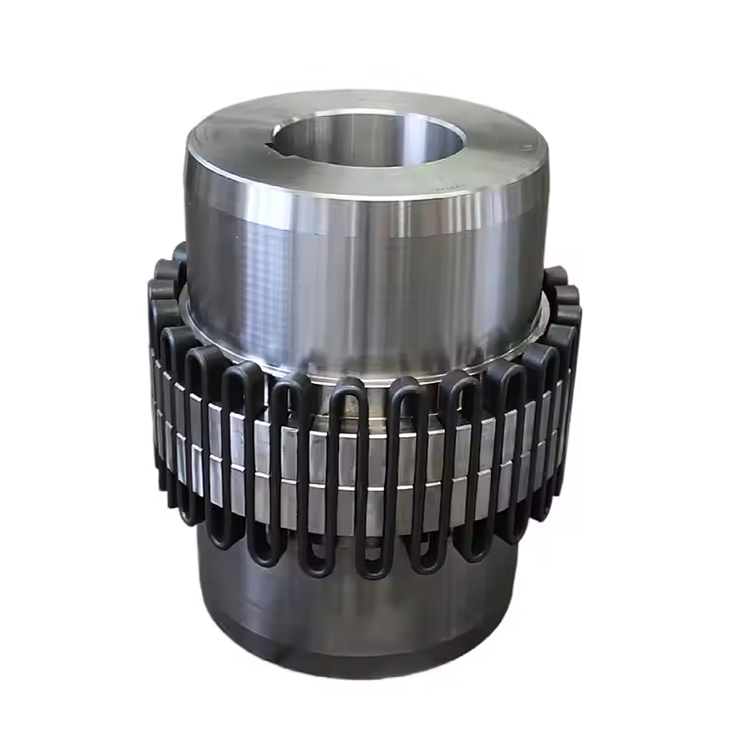
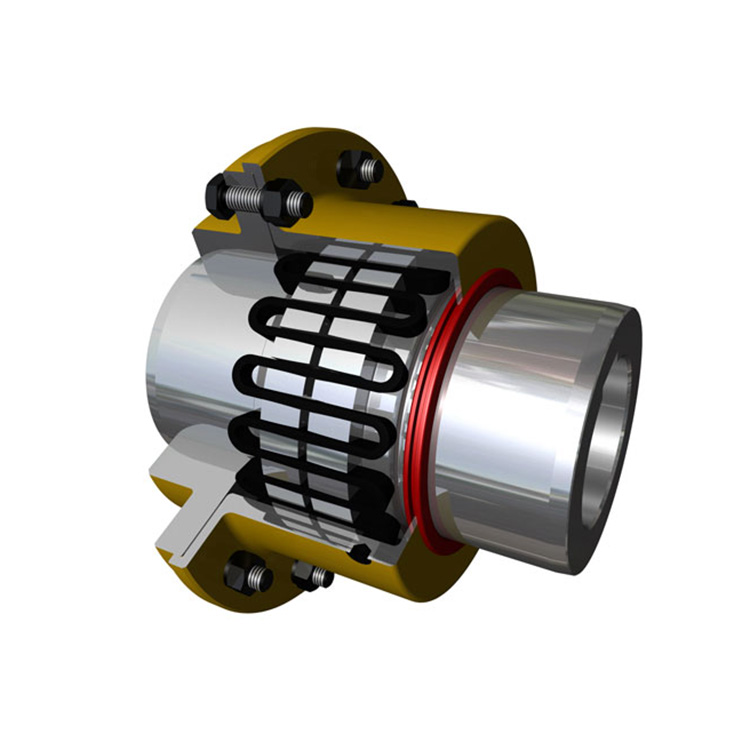
A grid coupling designed for 5,000 hours of heavy-shock service and one rated for 30,000 hours under the same duty are not the same product at different prices — they are different products, and the price gap is the cheapest part of the difference. Field data from heavy-duty installations consistently shows that grid cross-section, tooth hardness, and seal quality — the expensive parts of manufacturing — are exactly the parts that decide how many years a coupling survives.
In a paper mill, for example, a dryer-section coupling working 7,000 hours a year with frequent starts typically sees a grid replacement every two to three years. A plant standardizing on a higher-grade grid coupling with hardened teeth and a sealed cover routinely stretches that to four years or more. The extra initial outlay of roughly 20-25% pays back through one fewer planned change-out per machine over a decade.
Maintenance Cost: The Line Item Most Budgets Miss
Lubrication, inspection, and component replacement are where coupling cost actually accumulates. A grid coupling needs grease service on an interval that depends on speed and environment — from three months in a dusty transfer house to twelve months in clean indoor service. Each service costs labor, lubricant, and, when done properly, a recorded inspection that catches the early wear other designs hide.
Compare that against maintenance-free designs that carry a sealed, lifelong-lubricated element. Their service cost is near zero for the element itself, but the trade-off appears elsewhere: a full coupling replacement instead of a grid swap, a higher spare-part inventory for non-standard sizes, and, in some cases, lower shock capacity that forces either a bigger unit or a faster failure. The grid coupling advantage is that its serviceable components are cheap and standardized, keeping the routine cost small even when the environment is harsh.
Failure Risk and Downtime Cost
The largest single cost in any coupling decision is the unplanned stop. One hour of lost production on a continuous process line can exceed the annual coupling budget for the entire plant. This is where grid coupling performance pays its way: the grid element fails gradually — wear shows in the grease and the vibration signature long before fracture — so plants get warning instead of surprise, and a grid change is a scheduled two-hour job, not an emergency teardown.
Rigid and low-cost flexible designs offer no such progression. Their failure modes are often sudden — a cracked hub, a broken element that sheds debris into the machine — converting a routine coupling issue into a gearbox or motor repair. For plants where uptime is revenue, the performance attributes that matter are not on the price list: they are failure predictability, replaceability, and the ability to run until a planned window.
Total Cost of Ownership Comparison Framework
A defensible industrial coupling cost analysis sums five numbers: purchase price, installation labor, routine maintenance per year, expected component replacement per year, and the risk-adjusted cost of failure. Applied to a 150 kW conveyor drive over a ten-year horizon, a mid-price grid coupling with quarterly service and a grid change every three years typically lands below a cheaper rigid alternative once two factors are included — the rigid unit's higher misalignment-driven maintenance on connected bearings, and its sudden failure profile.
The framework also exposes when a grid coupling is the wrong buy. For a light, clean, constant-speed fan running 4,000 hours a year with negligible shock, the maintenance cost of a serviceable coupling may exceed the savings from its replaceable grid, and a simpler flexible element wins on total cost. The analysis does not always favor the grid — it favors whoever priced in the real operating conditions.
Matching Coupling Spend to Application Severity
The practical rule for procurement teams: let the application set the performance level, then buy the cheapest coupling that meets it. Uniform, low-shock, clean-service drives take the economical end of the range. Heavy shock, misalignment drift, dust, and continuous duty justify the premium — that is where the higher-cost grid coupling configuration earns its keep through service life and predictable failure.
Standardizing across a plant on one coupling family also drives down cost in ways invisible to a single-unit comparison: volume pricing from the supplier, one spare-grid stock covering multiple machines, and maintenance crews that learn one service procedure instead of five. Plants that consolidate on a grid coupling line for their heavy-duty fleet routinely report 15-20% lower total coupling spend within two years, mostly from fewer change-outs and lower spare inventory.
Frequently Asked Questions
Why is one grid coupling three times the price of another?
The difference is usually material grade, tooth hardening, balance certification, seal quality, and documented inspection. Cheaper units skip the process controls that determine service life. For heavy duty, the premium buys years of service; for light duty, the cheaper unit is often adequate and the right economic choice.
How do I estimate total cost of ownership for a coupling?
Add purchase price, installation, annual maintenance labor and lubricant, expected annual component replacement, and the risk-adjusted cost of an unplanned failure. Use your own plant's failure history to estimate the last term — it is usually the largest and the most often omitted.
Does a more expensive grid coupling always last longer?
Not automatically — price must be matched to the application. An expensive high-speed, high-balance unit bought for a slow, shock-loaded drive wastes money on attributes the duty never uses. The correct question is not "which costs more" but "which specification matches this duty without margin being wasted."
When should I avoid a grid coupling on cost grounds?
For clean, constant-speed, low-shock drives where a maintenance-free element outlives the grid coupling's service interval, the simpler design often wins on total cost. Run the five-line ownership analysis before defaulting to the same coupling you use on the crusher.
Conclusion
Grid coupling cost decisions fail when they are made on the purchase price alone. The performance characteristics that decide real expense — service life, maintenance burden, failure predictability, and replaceability — are precisely what differentiate coupling designs and grades, and they are invisible on the quotation. A disciplined total-cost comparison that prices in downtime and maintenance consistently shows the grid coupling earning its place on heavy, shock-loaded duty, while the same analysis steers lighter applications toward simpler, cheaper elements. Buyers who run that analysis get the coupling the application needs and the budget the plant can defend.
References
AGMA 9002-B04 — Flexible Couplings: Design Considerations and Selection
ISO 14691:2008 — Flexible Couplings: Design, Selection and Application
Mancuso, J.R. (1999). Couplings and Joints: Design, Selection, and Application, 2nd Edition. Marcel Dekker.
Bloch, H.P. & Geitner, F.K. (2011). Machinery Failure Analysis and Troubleshooting, 4th Edition. Butterworth-Heinemann.
Brasel, J.N. (2010). "Failure Analysis of Grid Couplings in Heavy-Duty Applications." Journal of Mechanical Design, 132(8), 081001.