

Industrial grid coupling manufacturing is undergoing a transformation driven by advances in materials science, precision machining, digital quality systems, and sustainability mandates. For procurement teams and reliability engineers responsible for coupling specifications, understanding these manufacturing trends directly impacts the performance, longevity, and total cost of ownership of grid couplings installed across mining, steel processing, pulp and paper, and petrochemical applications.
This article examines the manufacturing technology shifts reshaping how grid coupling components are designed, produced, and validated. The trends discussed are not theoretical — they are already being adopted by leading coupling manufacturers and will increasingly define the performance standards buyers should expect in the coming decade.
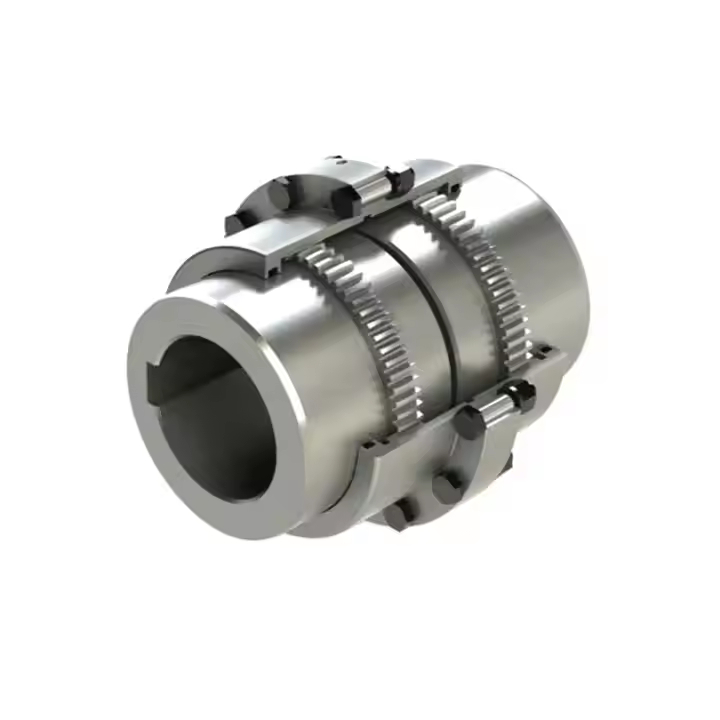
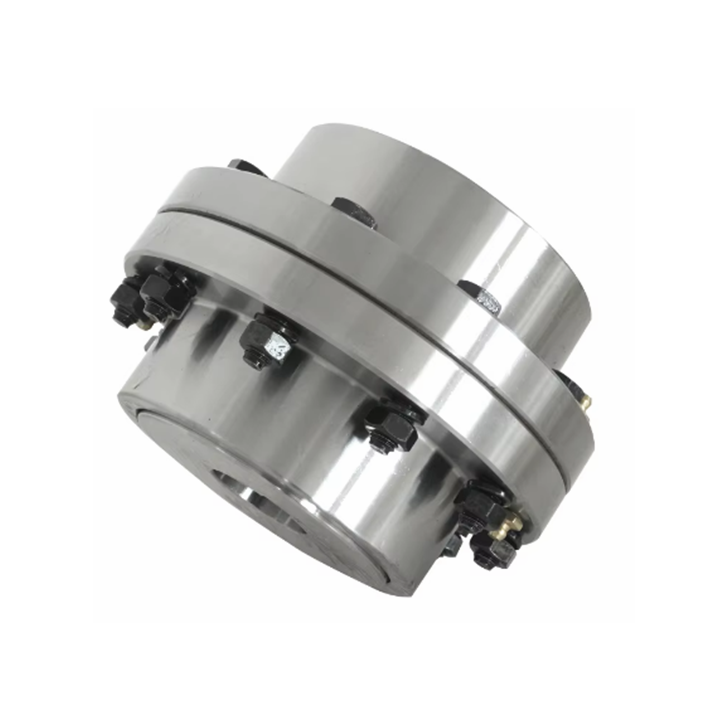
Advanced Materials: Beyond Standard Spring Steel
Grid spring elements have traditionally been manufactured from standard spring steel grades — primarily AISI 1070, 1095, or equivalent high-carbon steels that provide adequate fatigue life under moderate operating conditions. However, demanding applications in mining, offshore, and high-temperature environments are pushing these conventional materials beyond their performance limits, creating demand for advanced alloy alternatives.
Stainless steel grid materials — particularly precipitation-hardening grades such as 17-4PH and custom 455 — offer significantly improved corrosion resistance while maintaining fatigue strength comparable to standard spring steels. In humid, salt-spray, or chemically aggressive environments, stainless grids eliminate the corrosion-related surface degradation that accelerates fatigue crack initiation, extending service life by 2-3 times compared to carbon steel grids in identical applications.
Superalloy grid development represents an emerging frontier for extreme-temperature grid coupling applications. Nickel-based superalloys such as Inconel X-750 and Haynes 25 retain mechanical properties at temperatures exceeding 1,000°F where conventional spring steels have lost over 50% of their room-temperature strength. These materials enable grid coupling operation in high-temperature process environments — including refining, petrochemical, and power generation applications — where current coupling technology requires derating or alternative coupling types.
Surface treatment technologies are advancing beyond standard heat treatment and shot peening. Nitriding, carburizing, and advanced coating processes — including physical vapor deposition (PVD) and diamond-like carbon (DLC) coatings — dramatically improve grid surface hardness and wear resistance without affecting core mechanical properties. These treatments extend grid life by reducing the surface fatigue mechanisms that initiate most grid failures.
Precision Machining and Hub Manufacturing Innovations
Hub tooth profile accuracy directly determines grid coupling performance. The tooth form must match the grid spring's serpentine geometry with precise clearances that enable smooth flexing without excessive backlash or binding. Traditional machining methods using form cutters and broaching tools produce tooth profiles adequate for standard applications but limited in the dimensional consistency needed for high-performance and high-speed couplings.
Five-axis CNC machining centers are replacing traditional broaching and milling operations for hub tooth profile generation. Multi-axis capability produces complex tooth forms — including crowned and modified profiles optimized for specific misalignment conditions — that were impractical or impossible with conventional tooling. The resulting tooth profiles provide more uniform load distribution across the grid spring engagement length, reducing peak tooth stresses by 15-25% compared to standard profiles.
Gear grinding after milling operations achieves surface finishes below 0.8 micrometers Ra — substantially smoother than milled surfaces typically produce. This improved finish reduces friction between the grid and hub teeth during flexing, lowering heat generation and extending both grid and hub service life. Grinding also enables tighter profile tolerance control, reducing variation between coupling units that previously required manual fitting during assembly.
Electrochemical machining (ECM) is emerging as a viable alternative for producing hub tooth profiles in difficult-to-machine materials. ECM removes material through controlled electrochemical dissolution without mechanical contact, eliminating tool wear concerns and producing stress-free surfaces that maintain the material's original metallurgical properties. This capability is particularly valuable for hubs manufactured from hardened tool steels or advanced alloys that challenge conventional cutting tools.
Digital Quality Control and Process Monitoring
Quality assurance in grid coupling manufacturing is transitioning from inspection-based systems — testing finished products against specifications — to process-based systems that monitor and control manufacturing parameters in real time. This shift catches quality deviations earlier in the production process, reducing scrap rates and improving first-pass yield.
In-process monitoring systems integrated into CNC machining centers measure cutting forces, vibration signatures, and tool wear during hub machining operations. Deviations from normal patterns trigger alerts before defective features are produced, enabling immediate corrective action. These systems detect tool wear progression, chatter development, and thermal drift that would otherwise affect tooth profile accuracy until post-process inspection revealed the problem.
Coordinate measuring machines (CMMs) equipped with laser scanning probes perform comprehensive dimensional verification of finished hub and grid components in minutes rather than hours. Point-cloud data from laser scans captures full surface geometry rather than discrete measurement points, identifying surface irregularities and profile deviations that traditional touch-probe CMMs might miss. This enhanced inspection capability correlates directly with improved coupling performance consistency from unit to unit.
Statistical process control (SPC) systems aggregate quality data across production runs, identifying trends that indicate process drift before tolerance violations occur. Leading grid coupling manufacturers use SPC dashboards to monitor key characteristics — tooth profile dimensions, grid spring hardness distribution, and hub bore concentricity — in real time, shifting from reactive quality correction to predictive process management.
Additive Manufacturing Applications in Coupling Production
Additive manufacturing (AM) is finding specific applications within grid coupling production, though not yet for primary load-bearing components. Coupling covers, seal retainers, and specialized adapter flanges are being produced using metal 3D printing technologies — particularly selective laser melting (SLM) and direct metal laser sintering (DMLS) — for low-volume and custom configurations where traditional manufacturing tooling costs are prohibitive.
The primary advantage of additive manufacturing for coupling components is design freedom. Internal cooling channels in coupling covers, optimized lattice structures that reduce weight while maintaining strength, and integrated features that eliminate assembly operations all become feasible with AM methods. These capabilities are particularly valuable for specialty applications — subsea, aerospace, and custom OEM integrations — where production volumes are low and customization requirements are high.
Hybrid manufacturing approaches combine additive and subtractive processes. Near-net-shape AM builds produce coupling component blanks that are finish-machined to final dimensions using conventional CNC operations. This approach reduces material waste by 40-60% compared to fully machined-from-billet production while achieving the surface finishes and dimensional tolerances that pure AM processes cannot deliver.
Current material limitations restrict additive manufacturing from producing primary grid spring elements or hub bodies for standard industrial couplings. AM-produced materials often exhibit anisotropic mechanical properties — different strength in different orientations — that create unpredictable fatigue behavior in cyclically loaded coupling components. However, ongoing research in AM material qualification and post-processing is steadily expanding the range of components suitable for additive production.
Automation and Smart Factory Integration
Industrial automation is transforming grid coupling production from batch-oriented manual operations into continuous-flow smart manufacturing processes. Robotic handling systems transfer components between machining stations, eliminating manual material handling that introduces variability and safety risks. Automated guided vehicles (AGVs) deliver raw materials and finished goods within the production facility, reducing lead times and improving material flow visibility.
Flexible manufacturing cells — groups of CNC machines, robots, and inspection stations organized around specific product families — enable coupling manufacturers to produce multiple hub sizes and configurations on the same production line without changeover downtime. This flexibility reduces batch sizes, shortens lead times, and enables just-in-time production that reduces inventory requirements for both manufacturer and customer.
Industrial IoT connectivity links manufacturing equipment, quality systems, and enterprise resource planning (ERP) platforms into integrated data ecosystems. This connectivity provides end-to-end traceability for each grid coupling unit — from raw material certification through each machining, heat treatment, and inspection operation to final shipment. Customers in regulated industries increasingly require this level of traceability as a condition of procurement.
Sustainability and Environmental Manufacturing Practices
Sustainability requirements are reshaping coupling manufacturing in ways that affect product specification and procurement decisions. Regulatory frameworks including REACH, RoHS, and various national environmental mandates restrict material choices and manufacturing processes. Forward-thinking coupling manufacturers are adopting sustainable practices proactively, anticipating regulatory tightening and customer sustainability requirements.
Energy consumption reduction in manufacturing operations is a primary sustainability focus. Advanced machining strategies — optimized cutting parameters, high-efficiency spindle designs, and regenerative drive systems — reduce per-unit energy consumption by 20-30% compared to conventional machining approaches. Heat treatment operations, traditionally the most energy-intensive manufacturing step, benefit from vacuum furnace technologies that combine lower energy consumption with improved metallurgical consistency.
Coolant management and waste reduction programs address the environmental impact of metalworking fluids used in hub machining operations. Closed-loop coolant recycling systems extend fluid life by filtering contaminants and maintaining chemical balance, reducing both waste volume and fresh fluid consumption. Some manufacturers are transitioning to minimum quantity lubrication (MQL) systems that reduce coolant usage by over 80% compared to flood coolant approaches.
End-of-life considerations are influencing grid coupling design for the first time. Modular designs that enable component-level replacement — grids, seals, and covers replaced independently of hub assemblies — extend overall product life while reducing material waste. Some manufacturers are developing take-back programs that recover and recycle coupling materials at end of service life, closing the material loop and reducing environmental impact.
Frequently Asked Questions
How will advanced materials change grid coupling performance?
Advanced materials — including stainless spring steels, superalloys, and coated surfaces — address specific performance limitations of conventional spring steel grids. Corrosion resistance, temperature capability, and surface wear resistance improvements translate directly to longer service life and broader application ranges. Expect to see more material options available as standard catalog selections within the next five years, particularly from manufacturers serving demanding environments.
Is additive manufacturing ready for grid coupling production?
Additive manufacturing is currently viable for non-critical coupling components — covers, adapters, and specialty flanges — particularly in low-volume or custom configurations. Primary load-bearing components (hub bodies and grid springs) require further material qualification before AM can replace conventional manufacturing. Expect gradual adoption as AM material standards evolve and cost-competitiveness improves for production quantities.
What should buyers look for in coupling manufacturing quality?
Look for manufacturers with ISO 9001 certification, documented in-process monitoring systems, and comprehensive material traceability. Request dimensional inspection reports and material test certificates with each order. Manufacturers who invest in CNC precision machining, laser scanning inspection, and statistical process control demonstrate the quality commitment that correlates with consistent field performance.
How do sustainability trends affect coupling procurement?
Sustainability requirements increasingly influence material restrictions, reporting requirements, and supplier evaluation criteria. Procurement teams should verify supplier compliance with REACH, RoHS, and applicable environmental regulations. Manufacturers with documented sustainability programs and end-of-life recovery initiatives are positioning themselves for long-term supply chain compliance as environmental requirements tighten globally.
Will smart manufacturing reduce coupling lead times?
Yes. Flexible manufacturing cells and automated production systems enable coupling manufacturers to reduce batch sizes, shorten changeover times, and produce to demand rather than building inventory. Smart factory integration with ERP systems enables real-time order tracking and predictable delivery schedules. Expect standard coupling lead times to continue decreasing as manufacturing automation matures.
Conclusion
The manufacturing technology landscape for grid coupling production is evolving rapidly, driven by advanced materials, precision machining innovations, digital quality systems, and sustainability imperatives. These trends are not academic — they are actively reshaping the performance capabilities, quality consistency, and environmental footprint of grid couplings available to industrial buyers. Procurement teams and reliability engineers who understand these manufacturing advances are better positioned to evaluate supplier capabilities, specify appropriate coupling configurations, and make informed decisions that optimize equipment performance and lifecycle costs across the demanding industrial applications where grid couplings deliver their greatest value.
References
AGMA 9002-B04 — Flexible Couplings: Design Considerations and Selection
ISO 14691:2008 — Flexible Couplings: Design, Selection and Application
Attanasio, A. et al. (2020). "Advanced Surface Treatments for Improving Fatigue Life of Steel Components." Surface and Coatings Technology, 394, 125891.
Gibson, I., Rosen, D. & Stucker, B. (2021). Additive Manufacturing Technologies, 3rd Edition. Springer.
Koren, Y. et al. (2018). "Industry 4.0 for the Metal Cutting Industry." International Journal of Production Research, 56(1-2), 346-360.