

Industrial gear couplings are fundamental components in heavy‑duty mechanical power transmission systems. Designed to connect two rotating shafts, they transmit torque while compensating for angular, parallel, and axial misalignment. Built for durability and high load capacity, gear couplings are widely used in steel mills, mining equipment, paper machines, crushers, conveyors, and other heavy industrial applications. This guide covers everything you need to know about industrial gear couplings, including how they work, types, benefits, selection, installation, and maintenance, with a focus on high-quality industrial gear couplings manufactured by our factory.
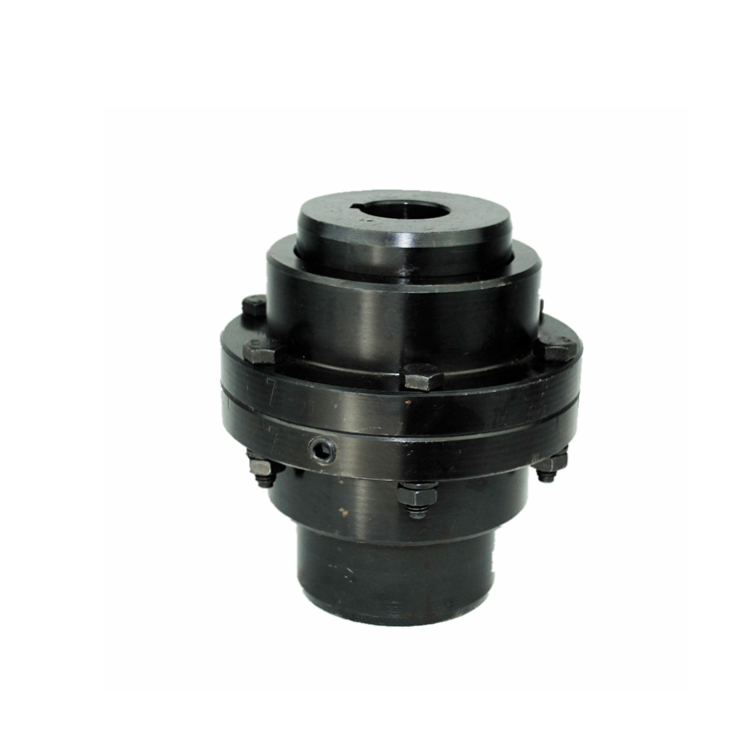
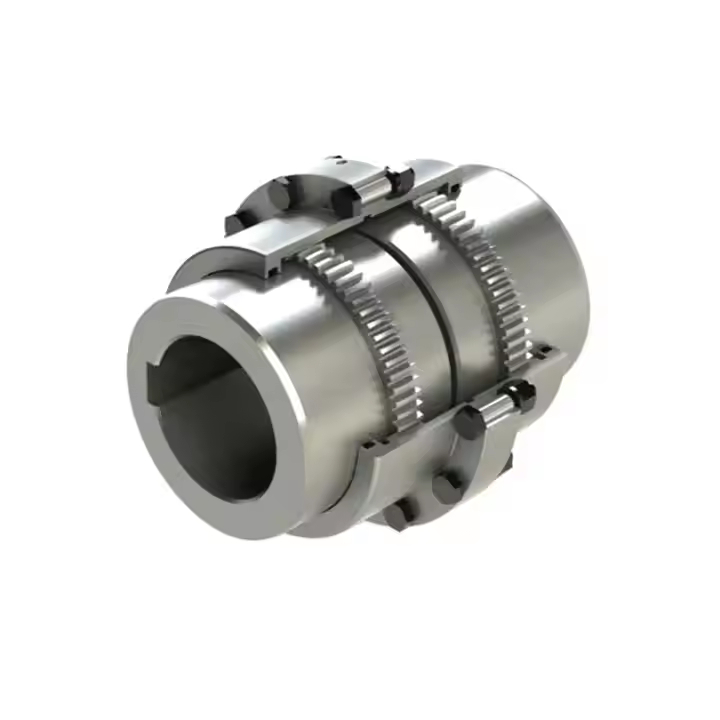
What Is an Industrial Gear Coupling?
An industrial gear coupling is a mechanical device that transfers torque between two shafts using meshing gear teeth. It consists of two hubs with external teeth, two sleeves with internal teeth, and sealing components such as gaskets or O‑rings. The tooth engagement allows flexibility to accommodate shaft misalignment while maintaining efficient power transmission. Unlike flexible elastomer couplings, gear couplings rely on metal‑to‑metal contact, making them ideal for high‑torque, high‑speed, and extreme‑temperature environments. Our factory specializes in manufacturing precision industrial gear couplings with strict material selection and advanced machining processes, ensuring stable performance even under the most demanding working conditions.
How Do Industrial Gear Couplings Work?
Gear couplings operate through the meshing of external and internal gear teeth. When the driving shaft rotates, the gear teeth engage and transfer rotational force to the driven shaft. The curved or crowned tooth design allows slight movement, absorbing misalignment caused by manufacturing tolerances, thermal expansion, or operational vibration. Proper lubrication is essential to reduce friction, prevent wear, and extend service life. The sealed structure keeps lubricant in and contaminants out, ensuring stable performance in harsh working conditions. All gear couplings produced by our factory adopt crowned tooth design for better misalignment compensation, longer service life, and lower maintenance costs.
Types of Industrial Gear Couplings
Different industrial scenarios require specific types of gear couplings. The most common categories include:
1. Full Gear Couplings
Full gear couplings feature gear teeth on both hubs and sleeves, providing strong torque capacity and excellent misalignment compensation. They are widely used in heavy machinery requiring high reliability. Our factory provides customized full gear couplings for heavy‑duty applications such as mining, metallurgy, and cement production.
2. Half Gear Couplings
Half gear combinations include one geared hub and one flexible or rigid component. They are suitable for applications with limited misalignment and simpler installation requirements.
3. Floating Shaft Gear Couplings
Floating shaft gear couplings have an extended middle shaft to connect distant rotating components. They are commonly used in long‑drive systems such as fans, pumps, and large industrial mills. We also supply floating shaft gear couplings with customizable shaft lengths to meet different installation needs.
4. High‑Speed Gear Couplings
Precision‑machined high‑speed gear couplings are balanced for dynamic stability. They are used in compressors, turbines, and high‑RPM industrial equipment. Our high‑speed gear couplings undergo precision dynamic balancing to ensure smooth and stable operation at high rotational speeds.
Key Benefits of Industrial Gear Couplings
Industrial gear couplings offer multiple advantages that make them irreplaceable in heavy‑duty applications:
·High Torque Transmission: Capable of handling extreme torque loads better than many other coupling types.
·Misalignment Accommodation: Compensates for angular, parallel, and axial shaft misalignment.
·Heavy‑Duty Durability: Metal construction provides long service life under shock and vibration.
·Wide Temperature Resistance: Performs reliably in high‑temperature and low‑temperature industrial environments.
·Compact Structure: Delivers high power density in a relatively small installation space.
·Low Maintenance: With proper lubrication, gear couplings require minimal upkeep.
These benefits are fully reflected in our factory’s industrial gear couplings, which are designed for long service life and reduced downtime.
Factors to Consider When Selecting Industrial Gear Couplings
Choosing the right industrial gear coupling improves efficiency, reduces downtime, and lowers operational costs. Key considerations include:
·Torque and Power Requirements: Match the coupling’s rated torque to the application’s peak load.
·Shaft Diameter and Speed: Ensure compatibility with shaft size and operational RPM.
·Type and Degree of Misalignment: Select based on angular, parallel, or axial offset.
·Environmental Conditions: Consider dust, moisture, temperature, and corrosion exposure.
·Lubrication and Sealing: Choose suitable sealing designs for maintenance accessibility.
·Installation Space: Confirm overall length, diameter, and mounting constraints.
Our professional engineering team can help you select the most suitable industrial gear coupling based on your actual working conditions and equipment parameters.
Installation and Maintenance Best Practices
Proper installation and regular maintenance significantly extend the service life of industrial gear couplings:
·Clean and inspect shafts and coupling components before assembly.
·Align shafts as accurately as possible to reduce unnecessary wear.
·Use recommended lubricants and fill to the proper level.
·Check seals regularly to prevent lubricant leakage and contamination.
·Inspect tooth condition for wear, pitting, or damage during routine maintenance.
·Re‑lubricate at intervals specified by the manufacturer.
·Replace worn gaskets, O‑rings, or damaged components promptly.
We provide detailed installation and maintenance guidelines for all our gear couplings to help you achieve maximum service life.
Common Applications of Industrial Gear Couplings
Industrial gear couplings manufactured by our factory are widely used across numerous industries:
·Steel and metal processing
·Mining and quarrying machinery
·Cement and crushing equipment
·Paper and textile manufacturing
·Power generation systems
·Marine and offshore equipment
·Conveyor systems and material handling
·Oil and gas processing machinery
Conclusion
Industrial gear couplings are essential for reliable, high‑performance power transmission in heavy industry. Understanding their structure, working principle, types, benefits, and maintenance requirements helps engineers and maintenance teams make informed decisions. Whether replacing an existing unit or designing a new drive system, choosing the right gear coupling improves uptime, efficiency, and operational safety. As a professional manufacturer of industrial gear couplings, our factory has rich production experience, strict quality control, and strong customization capabilities. We provide high‑performance, long‑lasting industrial gear couplings tailored to heavy‑duty applications for global customers. If you are looking for a reliable supplier of industrial gear couplings, welcome to contact us for product catalogs, quotations, and customized solutions.
References
GB/T 7714:Computerized generation and simulation of meshing of a novel crown gear coupling avoiding edge contact. Mechanism and Machine Theory, 136, 103436
MLA:Flexible Couplings—Gear Type—Flange Dimensions, Inch Series. American Gear Manufacturers Association.
APA:Theoretical and experimental study on gear-coupling contact and loads considering misalignment, torque, and friction influences. Mechanism and Machine Theory